
Case Study
Case Study
Case Study
Fixing Scroll Drop-Offs to Unlock Enquiry Growth
Fixing Scroll Drop-Offs to Unlock Enquiry Growth
Fixing Scroll Drop-Offs to Unlock Enquiry Growth
A data-led redesign of a high-traffic student accommodation property page to reduce early drop-offs, surface decision-critical content sooner, and improve enquiry intent through better information hierarchy and page flow.
A data-led redesign of a high-traffic student accommodation property page to reduce early drop-offs, surface decision-critical content sooner, and improve enquiry intent through better information hierarchy and page flow.
A data-led redesign of a high-traffic student accommodation property page to reduce early drop-offs, surface decision-critical content sooner, and improve enquiry intent through better information hierarchy and page flow.
My Role
My Role
My Role
Product Designer
(acting Product Owner)
Product Designer
(acting Product Owner)
Product Designer
(acting Product Owner)
Platform
Platform
Platform
Website
Website
Website
Status
Status
Status
In-Dev
In-Dev
In-Dev
Problem
Low scroll depth and poor engagement
Core value hidden deep in the page
Problem
Low scroll depth and poor engagement
Core value hidden deep in the page
Problem
Low scroll depth and poor engagement
Core value hidden deep in the page
Goal
Increase enquiry initiation from the property page.
Improve scroll depth
Major focus on M-web
Goal
Increase enquiry initiation from the property page.
Improve scroll depth
Major focus on M-web
Goal
Increase enquiry initiation from the property page.
Improve scroll depth
Major focus on M-web
Approach
Analyse user behaviour
Form data backed hypotheses
Redesign journey, not just UI
Approach
Analyse user behaviour
Form data backed hypotheses
Redesign journey, not just UI
Approach
Analyse user behaviour
Form data backed hypotheses
Redesign journey, not just UI
Context (why this mattered)
Context (why this mattered)
Context (why this mattered)
University Living does not support end-to-end bookings. Instead, the primary goal of the property page is to educate students, build trust, and drive enquiries.
However, despite high intent users landing on the page, a large portion exited before reaching the most valuable section — Room Types. This made the page a high-impact opportunity to improve both user experience and business outcomes.
University Living does not support end-to-end bookings. Instead, the primary goal of the property page is to educate students, build trust, and drive enquiries.
However, despite high intent users landing on the page, a large portion exited before reaching the most valuable section — Room Types. This made the page a high-impact opportunity to improve both user experience and business outcomes.
University Living does not support end-to-end bookings. Instead, the primary goal of the property page is to educate students, build trust, and drive enquiries.
However, despite high intent users landing on the page, a large portion exited before reaching the most valuable section — Room Types. This made the page a high-impact opportunity to improve both user experience and business outcomes.
Problem Statement
Problem Statement
Problem Statement
Despite strong visibility from search and internal navigation, the property detail page suffered from:
Low scroll depth
Early user drop-offs
Poor discoverability of room options
UI clutter that distracted from core actions
As a result, many students never reached the section where they typically spend the most decision-making time.
Despite strong visibility from search and internal navigation, the property detail page suffered from:
Low scroll depth
Early user drop-offs
Poor discoverability of room options
UI clutter that distracted from core actions
As a result, many students never reached the section where they typically spend the most decision-making time.
Despite strong visibility from search and internal navigation, the property detail page suffered from:
Low scroll depth
Early user drop-offs
Poor discoverability of room options
UI clutter that distracted from core actions
As a result, many students never reached the section where they typically spend the most decision-making time.
Success Metrics
Success Metrics
Success Metrics
Primary Metric
Increase the percentage of users reaching the Room Types section.
Secondary Metrics
Improve scroll depth beyond the second fold.
Increase enquiry initiation from the property page.
Primary Metric
Increase the percentage of users reaching the Room Types section.
Secondary Metrics
Improve scroll depth beyond the second fold.
Increase enquiry initiation from the property page.
Primary Metric
Increase the percentage of users reaching the Room Types section.
Secondary Metrics
Improve scroll depth beyond the second fold.
Increase enquiry initiation from the property page.
User Behaviour Insights
User Behaviour Insights
User Behaviour Insights
Scroll Behaviour
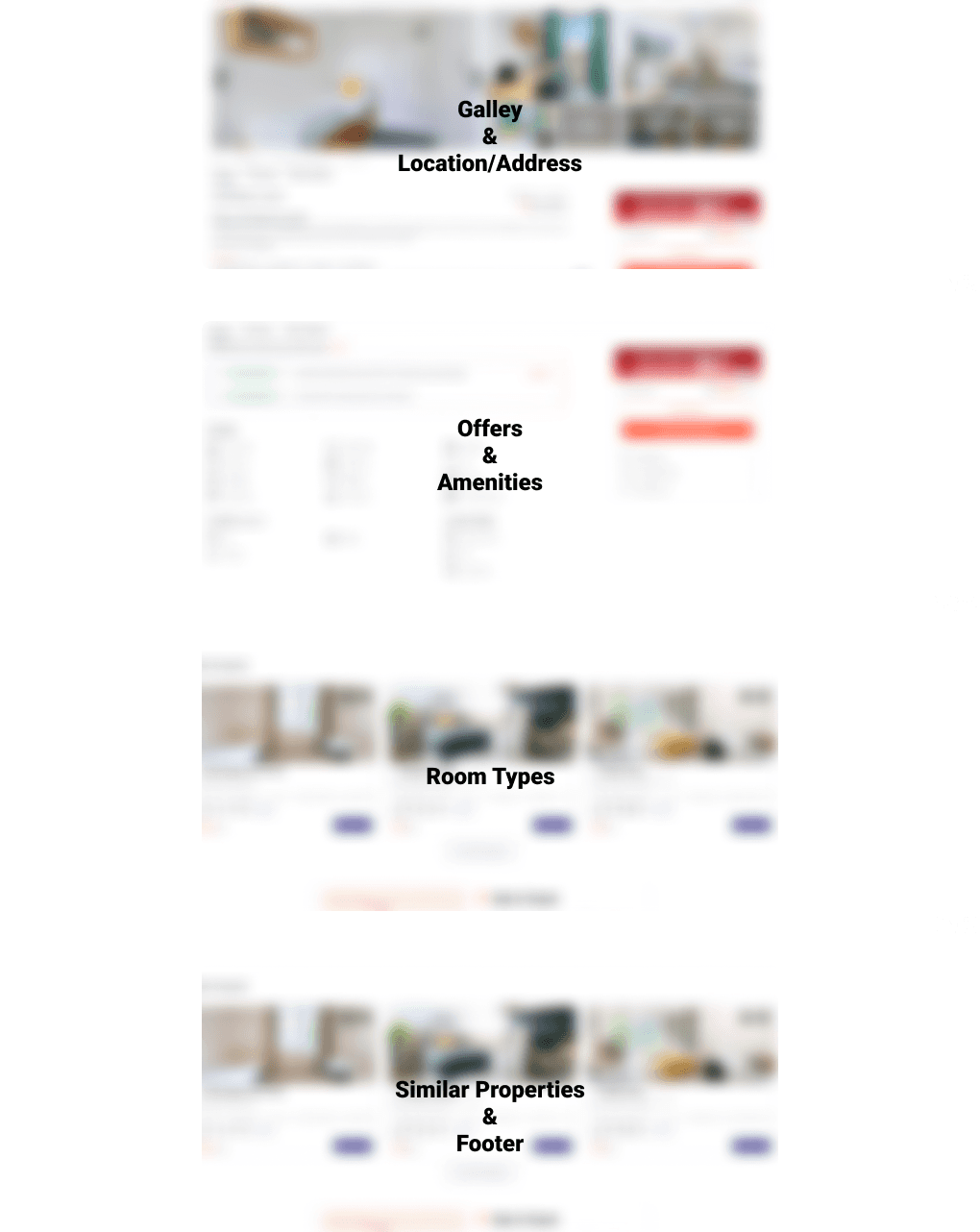
User engagement dropped sharply as users scrolled down the page. While the first fold retained the highest attention, only ~75% of users reached the second fold, and this reduced further to ~50% by the time the Room Types section appeared.
Attention Distribution
Users spent the most time interacting with the gallery and room-related content. However, many users never reached the room sections due to early drop-offs.
Second-Fold Engagement
The second fold provided limited actionable or decision-making value. Heatmap insights indicated minimal user attention in this section, with most users scrolling past it without interaction.
Structural Friction
Key features such as wishlist, compare, and breadcrumbs lacked a clear hierarchy, competing for attention instead of supporting the primary enquiry journey.
Trust & Decision Confidence
Users lacked strong trust signals early in the journey, that too when only 75% scroll past the 1st fold. Property quality and popularity cues were not clearly communicated, increasing hesitation before room discovery or enquiry.
Insights derived from internal analytics, heatmaps, and scroll data.
Scroll Behaviour
User engagement dropped sharply as users scrolled down the page. While the first fold retained the highest attention, only ~75% of users reached the second fold, and this reduced further to ~50% by the time the Room Types section appeared.
Attention Distribution
Users spent the most time interacting with the gallery and room-related content. However, many users never reached the room sections due to early drop-offs.
Second-Fold Engagement
The second fold provided limited actionable or decision-making value. Heatmap insights indicated minimal user attention in this section, with most users scrolling past it without interaction.
Structural Friction
Key features such as wishlist, compare, and breadcrumbs lacked a clear hierarchy, competing for attention instead of supporting the primary enquiry journey.
Trust & Decision Confidence
Users lacked strong trust signals early in the journey, that too when only 75% scroll past the 1st fold. Property quality and popularity cues were not clearly communicated, increasing hesitation before room discovery or enquiry.
Insights derived from internal analytics, heatmaps, and scroll data.
Scroll Behaviour
User engagement dropped sharply as users scrolled down the page. While the first fold retained the highest attention, only ~75% of users reached the second fold, and this reduced further to ~50% by the time the Room Types section appeared.
Attention Distribution
Users spent the most time interacting with the gallery and room-related content. However, many users never reached the room sections due to early drop-offs.
Second-Fold Engagement
The second fold provided limited actionable or decision-making value. Heatmap insights indicated minimal user attention in this section, with most users scrolling past it without interaction.
Structural Friction
Key features such as wishlist, compare, and breadcrumbs lacked a clear hierarchy, competing for attention instead of supporting the primary enquiry journey.
Trust & Decision Confidence
Users lacked strong trust signals early in the journey, that too when only 75% scroll past the 1st fold. Property quality and popularity cues were not clearly communicated, increasing hesitation before room discovery or enquiry.
Insights derived from internal analytics, heatmaps, and scroll data.
What this told us
What this told us
What this told us
Users weren’t disengaged — they simply weren’t reaching the most valuable parts of the page. The second fold acted as a dead zone in the user journey — adding scroll effort without adding value. This broke momentum early and reduced the likelihood of users reaching room discovery sections.
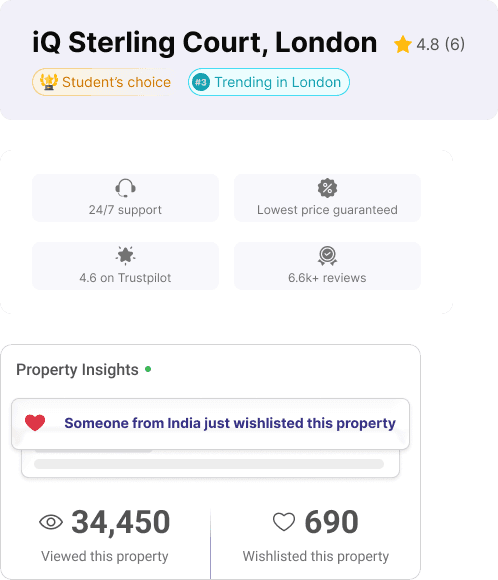
Beyond structural issues, the page lacked immediate trust and validation signals. For high-consideration decisions like student accommodation, users needed reassurance before investing time in deeper exploration.
Users weren’t disengaged — they simply weren’t reaching the most valuable parts of the page. The second fold acted as a dead zone in the user journey — adding scroll effort without adding value. This broke momentum early and reduced the likelihood of users reaching room discovery sections.
Beyond structural issues, the page lacked immediate trust and validation signals. For high-consideration decisions like student accommodation, users needed reassurance before investing time in deeper exploration.
Users weren’t disengaged — they simply weren’t reaching the most valuable parts of the page. The second fold acted as a dead zone in the user journey — adding scroll effort without adding value. This broke momentum early and reduced the likelihood of users reaching room discovery sections.
Beyond structural issues, the page lacked immediate trust and validation signals. For high-consideration decisions like student accommodation, users needed reassurance before investing time in deeper exploration.
Hypothesis
Hypothesis
Hypothesis
If we surface room information earlier, more users will reach decision-making sections.
If the second fold becomes actionable, it can drive more leads for the users who don't scroll much.
If UI elements are structured clearly, cognitive load will reduce.
If the page feels guided rather than static, enquiry intent will increase.
If credibility and social proof are surfaced early, user confidence and scroll depth will improve.
If property popularity and quality cues are visible upfront, enquiry intent will increase.
If we surface room information earlier, more users will reach decision-making sections.
If the second fold becomes actionable, it can drive more leads for the users who don't scroll much.
If UI elements are structured clearly, cognitive load will reduce.
If the page feels guided rather than static, enquiry intent will increase.
If credibility and social proof are surfaced early, user confidence and scroll depth will improve.
If property popularity and quality cues are visible upfront, enquiry intent will increase.
If we surface room information earlier, more users will reach decision-making sections.
If the second fold becomes actionable, it can drive more leads for the users who don't scroll much.
If UI elements are structured clearly, cognitive load will reduce.
If the page feels guided rather than static, enquiry intent will increase.
If credibility and social proof are surfaced early, user confidence and scroll depth will improve.
If property popularity and quality cues are visible upfront, enquiry intent will increase.
Product Decisions & Trade-offs
Product Decisions & Trade-offs
Product Decisions & Trade-offs
What we decided to do
Re-architect the entire page structure instead of making isolated UI fixes
Optimize content placement based on scroll behavior, not legacy structure
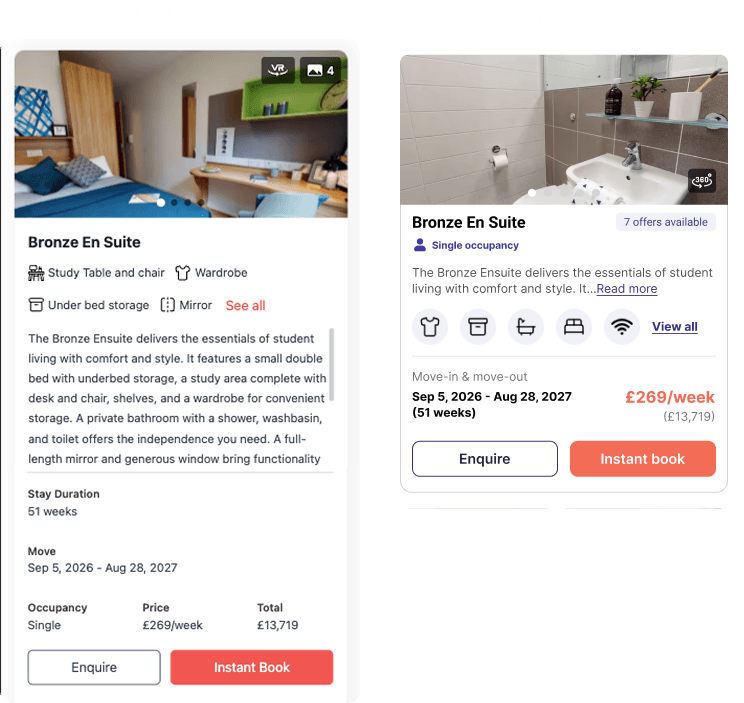
Bring room-related information closer to the top
Simplify and group secondary actions (wishlist, compare, breadcrumbs)
Prioritized trust and social proof as first-order decision drivers for high-consideration users.
What we decided to do
Re-architect the entire page structure instead of making isolated UI fixes
Optimize content placement based on scroll behavior, not legacy structure
Bring room-related information closer to the top
Simplify and group secondary actions (wishlist, compare, breadcrumbs)
Prioritized trust and social proof as first-order decision drivers for high-consideration users.
What we decided to do
Re-architect the entire page structure instead of making isolated UI fixes
Optimize content placement based on scroll behavior, not legacy structure
Bring room-related information closer to the top
Simplify and group secondary actions (wishlist, compare, breadcrumbs)
Prioritized trust and social proof as first-order decision drivers for high-consideration users.
What we consciously avoided
Adding more CTAs without improving clarity
Increasing content density without improving hierarchy
Treating this as a visual redesign rather than a behavioral problem
What we consciously avoided
Adding more CTAs without improving clarity
Increasing content density without improving hierarchy
Treating this as a visual redesign rather than a behavioral problem
What we consciously avoided
Adding more CTAs without improving clarity
Increasing content density without improving hierarchy
Treating this as a visual redesign rather than a behavioral problem
Before & After
Before & After
Before & After
Trust Factors
Trust Factors
Trust Factors
Room Cards Optimization
Room Cards Optimization
Room Cards Optimization
1st Fold Optimization
1st Fold Optimization
1st Fold Optimization
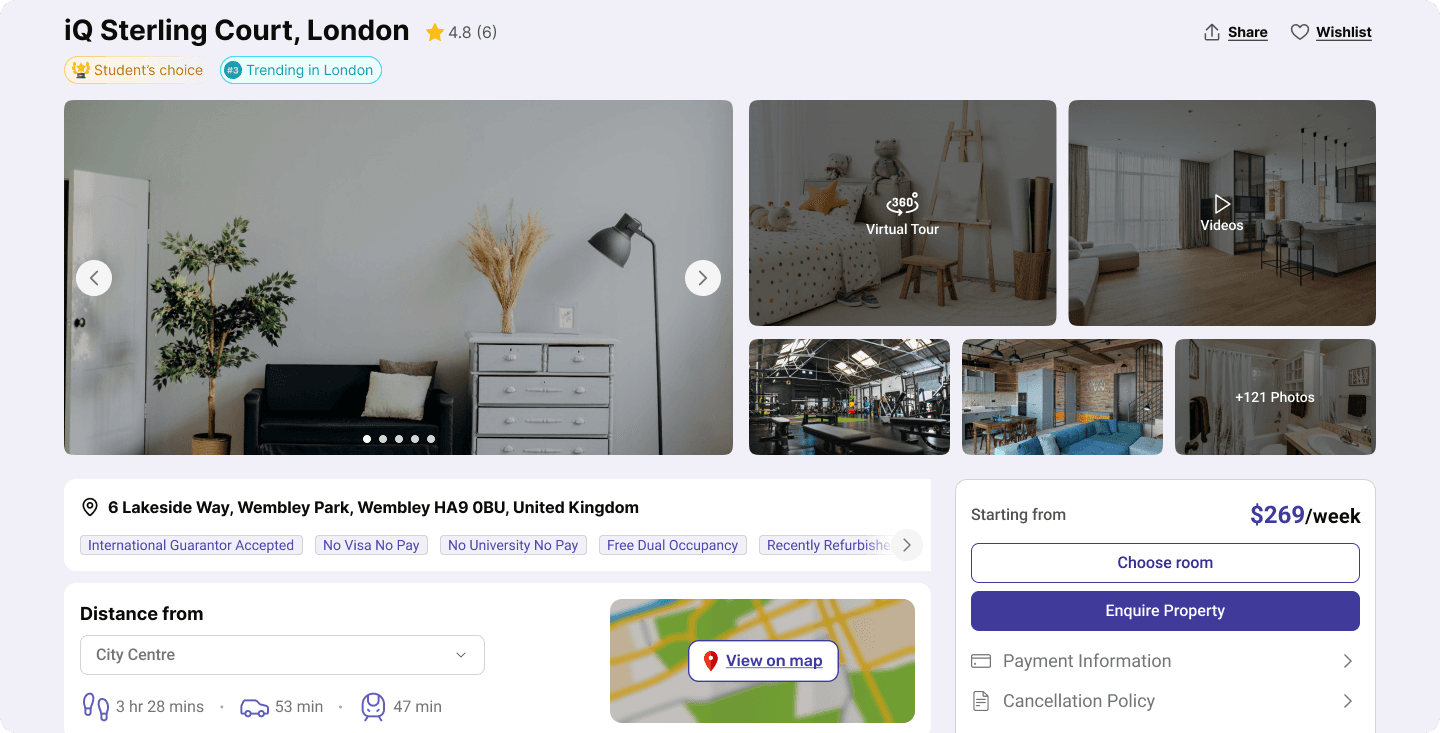
Emphasis on map visibility & upfront available room types
Emphasis on map visibility & upfront available room types
Emphasis on map visibility & upfront available room types
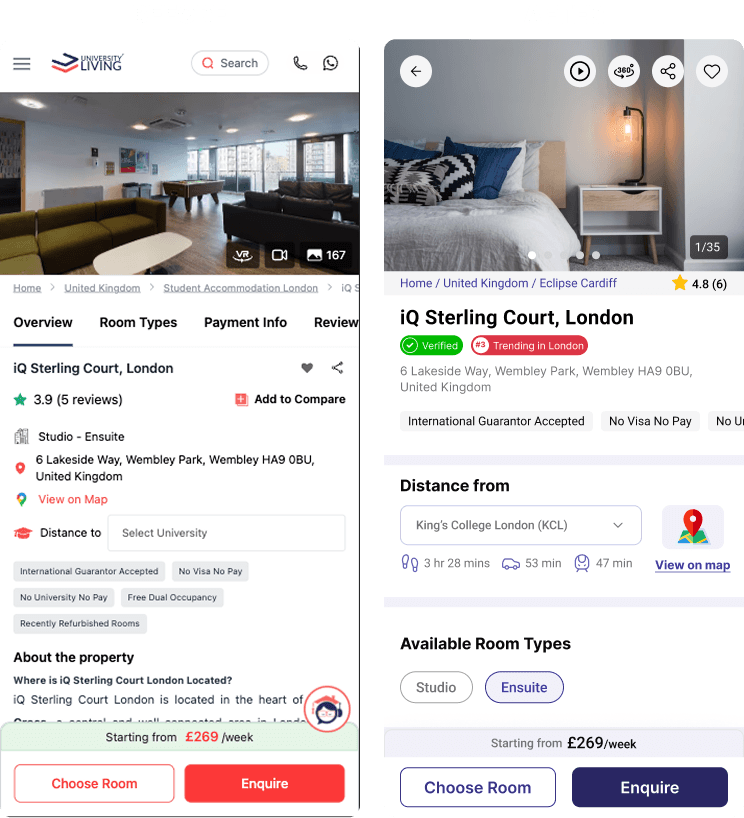
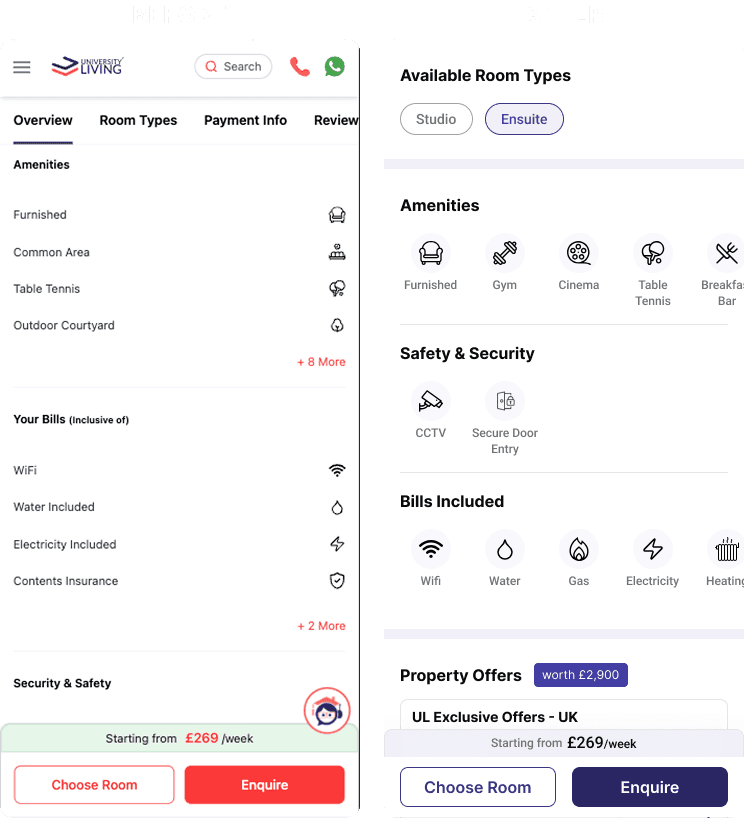
2nd Fold Optimization
2nd Fold Optimization
2nd Fold Optimization
Utilised white spacing to show more content in 2nd fold
Utilised white spacing to show more content in 2nd fold
Utilised white spacing to show more content in 2nd fold
Product Decisions
Product Decisions
Product Decisions
Prioritized scroll depth and content reach over visual density.
Chose structural re-ordering instead of incremental UI tweaks.
Aligned layout decisions with enquiry funnel goals.
Balanced stakeholder inputs while protecting core user intent.
Prioritized scroll depth and content reach over visual density.
Chose structural re-ordering instead of incremental UI tweaks.
Aligned layout decisions with enquiry funnel goals.
Balanced stakeholder inputs while protecting core user intent.
Execution Strategy
Execution Strategy
Execution Strategy
Analyzed scroll depth and heatmap data to identify drop-off points
Conducted user interviews to understand expectations from users as to what they consider most important
Explored multiple wireframe directions focused on content prioritization
Collaborated closely with PMs to align business and user goals
Iterated repeatedly based on feasibility, feedback, and clarity
Analyzed scroll depth and heatmap data to identify drop-off points
Conducted user interviews to understand expectations from users as to what they consider most important
Explored multiple wireframe directions focused on content prioritization
Collaborated closely with PMs to align business and user goals
Iterated repeatedly based on feasibility, feedback, and clarity
Analyzed scroll depth and heatmap data to identify drop-off points
Conducted user interviews to understand expectations from users as to what they consider most important
Explored multiple wireframe directions focused on content prioritization
Collaborated closely with PMs to align business and user goals
Iterated repeatedly based on feasibility, feedback, and clarity
The focus remained on improving the journey, not just polishing UI.
The focus remained on improving the journey, not just polishing UI.
The focus remained on improving the journey, not just polishing UI.
Final Solution — The New Property Page Journey
Final Solution — The New Property Page Journey
Final Solution — The New Property Page Journey
Clear property value and room availability surfaced earlier
Actionable second fold (on Desktop with sticky CTAs) that encourages continued scrolling
Room Types section made more discoverable
Structured placement of wishlist, compare, and navigation elements
Cleaner hierarchy to reduce distraction and guide intent
Clear property value and room availability surfaced earlier
Actionable second fold (on Desktop with sticky CTAs) that encourages continued scrolling
Room Types section made more discoverable
Structured placement of wishlist, compare, and navigation elements
Cleaner hierarchy to reduce distraction and guide intent
Clear property value and room availability surfaced earlier
Actionable second fold (on Desktop with sticky CTAs) that encourages continued scrolling
Room Types section made more discoverable
Structured placement of wishlist, compare, and navigation elements
Cleaner hierarchy to reduce distraction and guide intent
The page now feels like a guided exploration, not a long information dump.
The page now feels like a guided exploration, not a long information dump.
The page now feels like a guided exploration, not a long information dump.
Impact & Measurement Plan
Impact & Measurement Plan
Impact & Measurement Plan
Current Status
The redesigned page is currently under development / rollout.
Current Status
The redesigned page is currently under development / rollout.
Current Status
The redesigned page is currently under development / rollout.
Metrics to evaluate post-launch
Scroll depth improvement
Percentage of users reaching Room Types
Time spent on room sections
Enquiry initiation rate
Interaction with secondary features (wishlist, compare)
Metrics to evaluate post-launch
Scroll depth improvement
Percentage of users reaching Room Types
Time spent on room sections
Enquiry initiation rate
Interaction with secondary features (wishlist, compare)
Metrics to evaluate post-launch
Scroll depth improvement
Percentage of users reaching Room Types
Time spent on room sections
Enquiry initiation rate
Interaction with secondary features (wishlist, compare)